
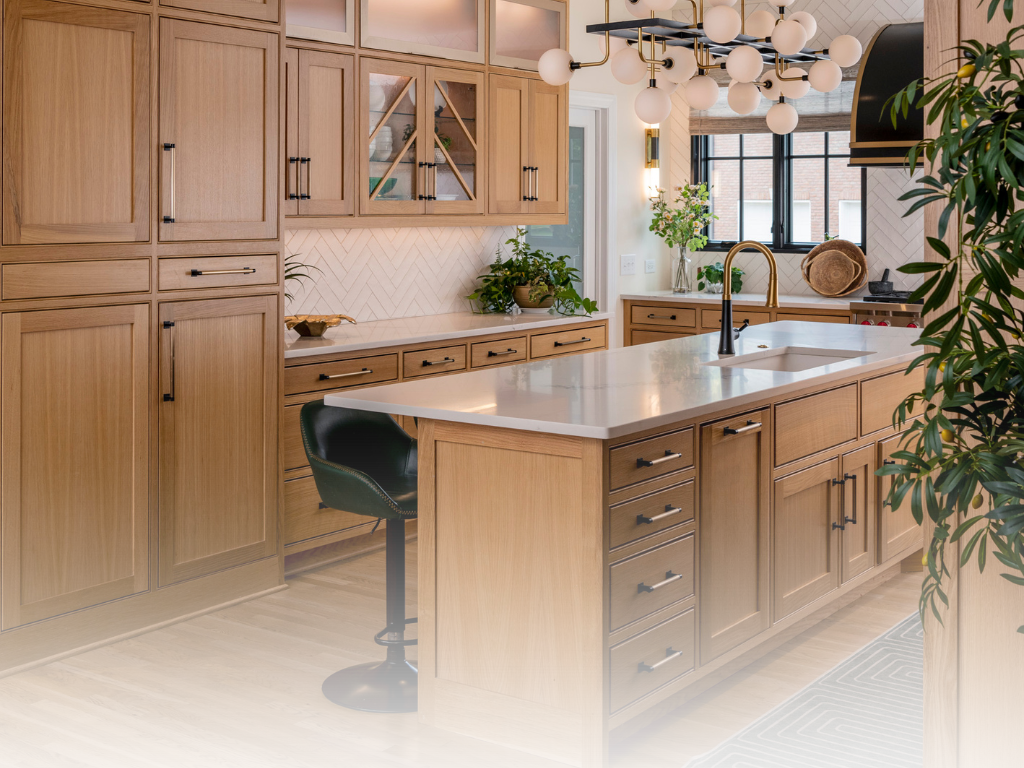
As a Registered Interior Designer, one of the statements I hear frequently is, “I’d rather have a space with good lighting and no furniture than a furnished space without good lighting!” Thank goodness the days of lighting plans that consisted of four cans and a ceiling fan are long gone. Remember those fluorescent boxes on kitchen ceilings? Yikes!
Too often, the importance of lighting is overlooked, or insufficient funds are allocated in the overall budget, which prevents consideration of the three key elements when planning for lighting: general, task, and ambient lighting. This layered approach provides safety, efficiency, and beauty through lighting.
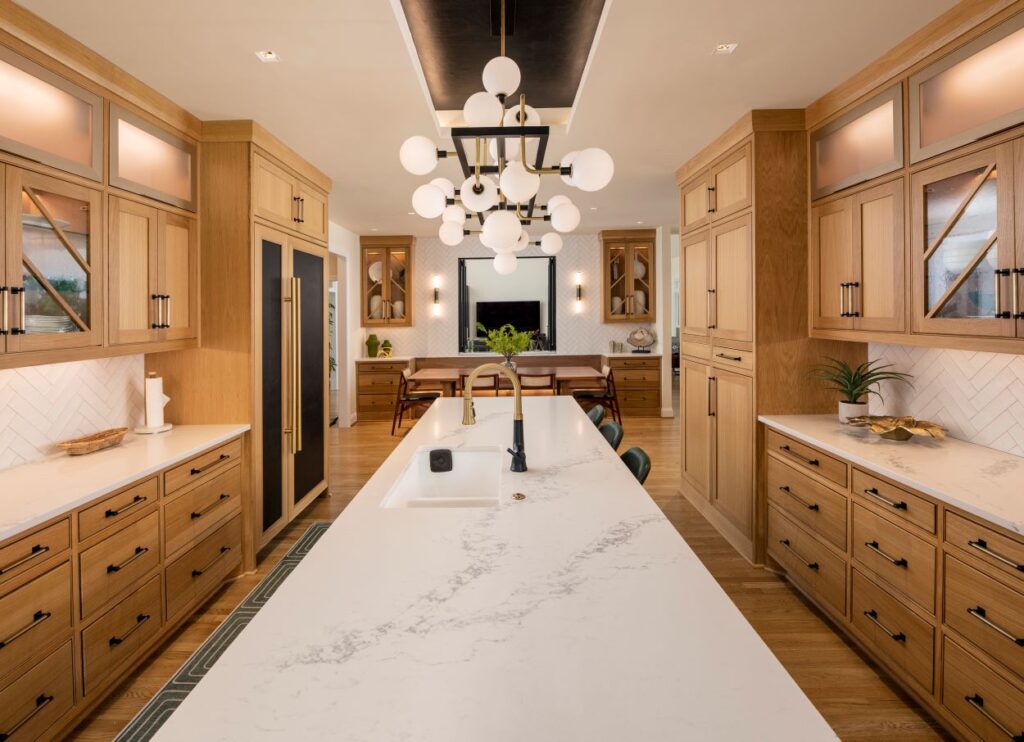
General lighting in a house illuminates the way, ensuring the inhabitants can move through a space safely and perform basic tasks like cleaning and maintenance with ease.
Task lighting, on the other hand, is focused on areas that require extra brightness to perform certain tasks. For example, under-upper-cabinet lighting so that the countertop space is well-lit, better to snip off the end of a carrot than the tip of a finger, a lamp positioned for reading, or spotlights aimed at sinks to assist with washing vegetables and prepping meals, and proper lighting over cooktops helps one keep an eye on the progress of cooking.
Ambient lighting sets the mood, highlights art or architectural features, showcases interior and exterior cabinet finishes, and generally provides an aesthetically pleasing backdrop, while also adding some drama if you choose.
As the master of light, James Turrell said, “Lighting should not only illuminate objects but also evoke feelings and create moods.” With literally thousands of great-looking light fixtures available today, selecting the right fixtures can be quite challenging. Appropriate sizes for various spaces, the temperature in Kelvin of the color of light the fixtures’ bulbs will provide, and the number of lumens, or light output in foot candles, are all factors to be considered for each and every light fixture.
For example, 2700Kelvin (K) will produce a nice, warm light, appropriate in some areas of residential settings. However, many areas in a home will be better suited for a 3,000K or 3500K, which will give off the most accurate white-ish light, and provide an accurate rendition of actual colors in a room, including paint, fabrics, carpet, stained wood, and tile. Switch to 4,000K or 5,000K, though, and you will wind up with all the colors in your space having a grayed or slight bluish tint—totally changes the perception of colors! That warm taupe color in the tile you just selected is suddenly gray! See what light temp you like best, then select all your materials and finishes under that color temp to avoid unpleasant surprises later.
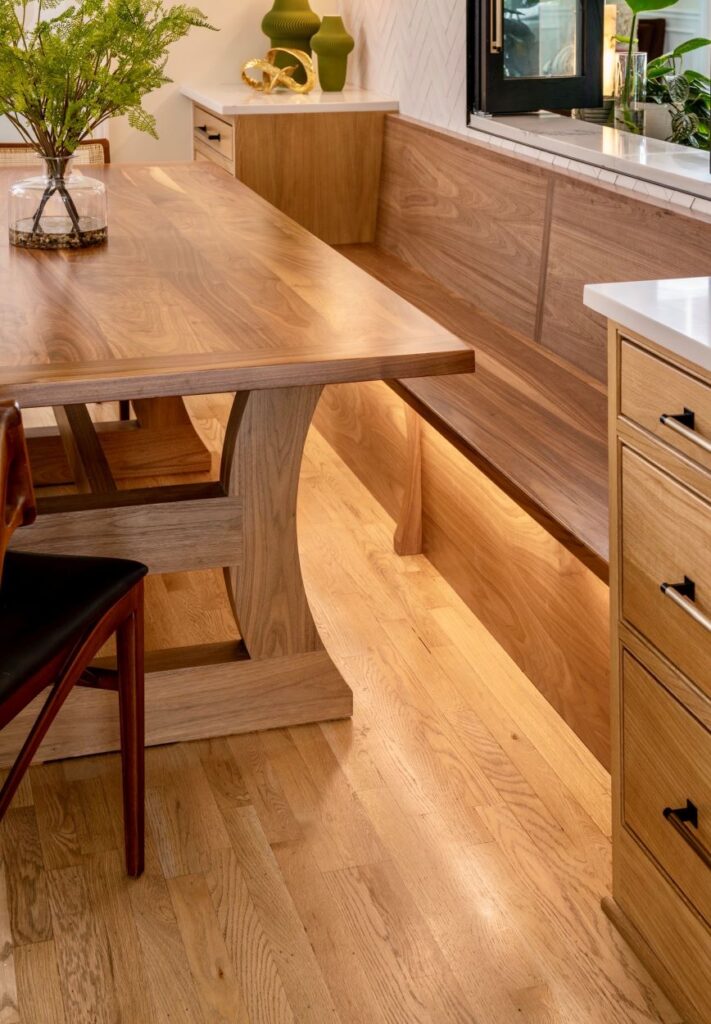
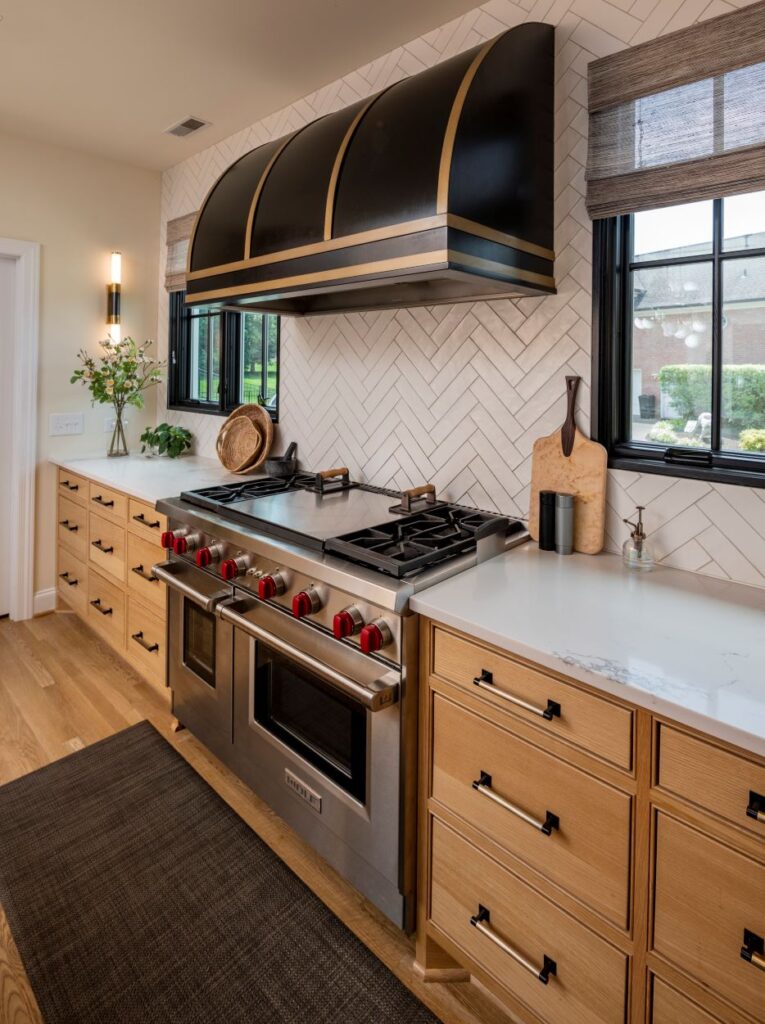
If possible, incorporating natural light through windows, skylights, transoms, and other openings is important in an overall lighting plan. A space with a blend of natural and artificial light supports well-being and promotes safety by reducing the risk of accidents.
As people age, they need more and often brighter light to see as well as they did when they were younger. Ocular fluid in eyes yellows with age, so again, the importance of the correct Kelvin temperature of the light is paramount—perhaps a 2700K bulb looks warm and cozy to a younger person. Still, the older individual may feel like it’s dim and too yellow. The ages, activities, and needs of individuals should be considered when preparing a lighting plan. As with all interiors, function is the priority, followed by form.
When possible, it is important to hire a professional to design a lighting plan. A designer can develop a lighting plan based on your furniture placement, cabinet and plumbing plans, artwork locations, and elevations. They will also select appropriate light fixtures, provide detailed specifications for your electrician, and recommend the bulbs to be used in each fixture. Planning your lighting from the start is not only more efficient, but it can also save you significantly, as it is far more expensive to go back and retrofit the lighting at the end of a project!
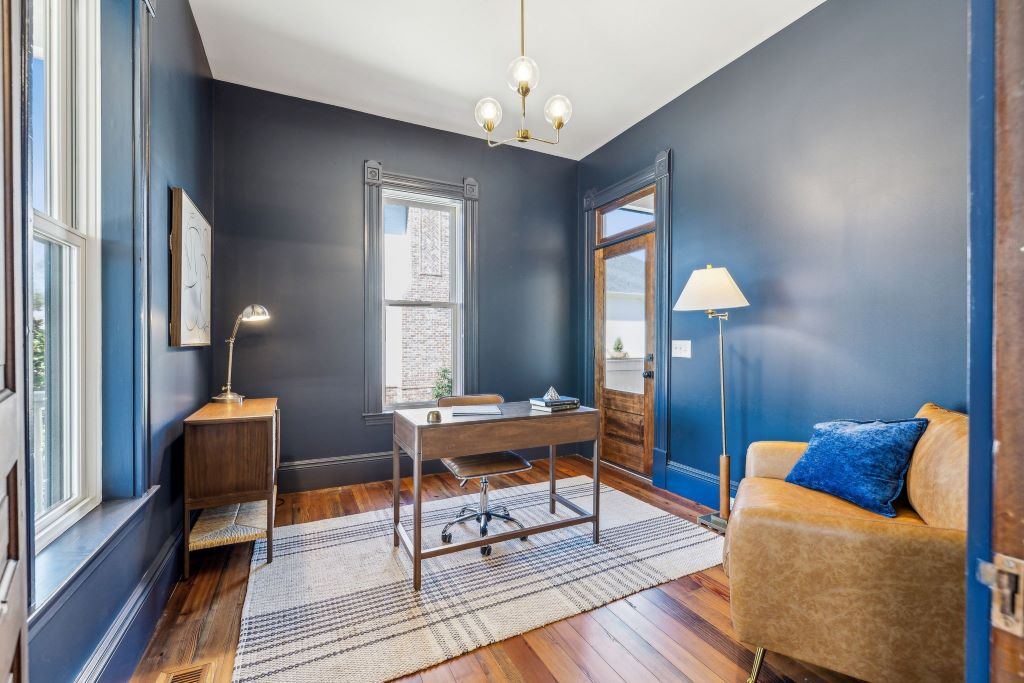
“Good lighting design can make a space, but great lighting can transform it.” —Unknown Author
TERESA J. BECK is a Registered Interior Designer, Allied ASID member, and NKBA certified. She has a unique ability for providing spaces that function well for clients, are environmentally sensitive, stand the test of time, and are beautiful. For additional information, visit tbektu.com.
Share this story
To share this on your Instagram Story: Tap “Share” to copy the link. Open Instagram, go to “Your Story,” add a background photo/video, tap the 🔗 icon, paste the link, and hit Done. Add stickers or text like “Check this out!” then tap “Your Story” to post. Quick and easy—thanks for sharing!
Related Articles
-
 Mere Bulles — A Brentwood Tradition Rooted in Southern Charm.
 -
 Take a Culinary JourneyIn Villa Rica, Georgia
 -
 An Eye for the Edit — The Art and Impact of Home Staging
 -
 A Front-Row Seat to Unforgettable Music — Columbia State’s Performance Series Enters Its 23rd Season
 -
 Bring Those Autumn Colors Inside
 -
 A Local Leader in Robotic Surgery — Dr. Cason Shirley
 -
 Hank The Highland and The Three Ballerinas