
Located just off the toe of Italy’s boot-shaped peninsula, is a beautiful island where rolling hills, volcanic mountains, and coastal beaches meet the sparkling blue waters of the Mediterranean Sea. Sicily entices visitors with ancient ruins left behind by the many civilizations that once flourished there. Greeks, Romans, Phoenicians, Normans, and Moors all shaped its culture, influencing architecture, traditions, and especially its distinctive cuisine – earning it the nickname God’s Kitchen.
Our journey begins on the eastern side of the island in Catania, located at the foot of Mt. Etna, Europe’s highest and most active volcano. Catania is renowned for its striking Baroque architecture, much of it constructed from black lava stone. After exploring the city, visitors can choose from a variety of excursions to experience Mount Etna’s dramatic landscape of smoldering craters, hardened lava flows, and majestic vistas.
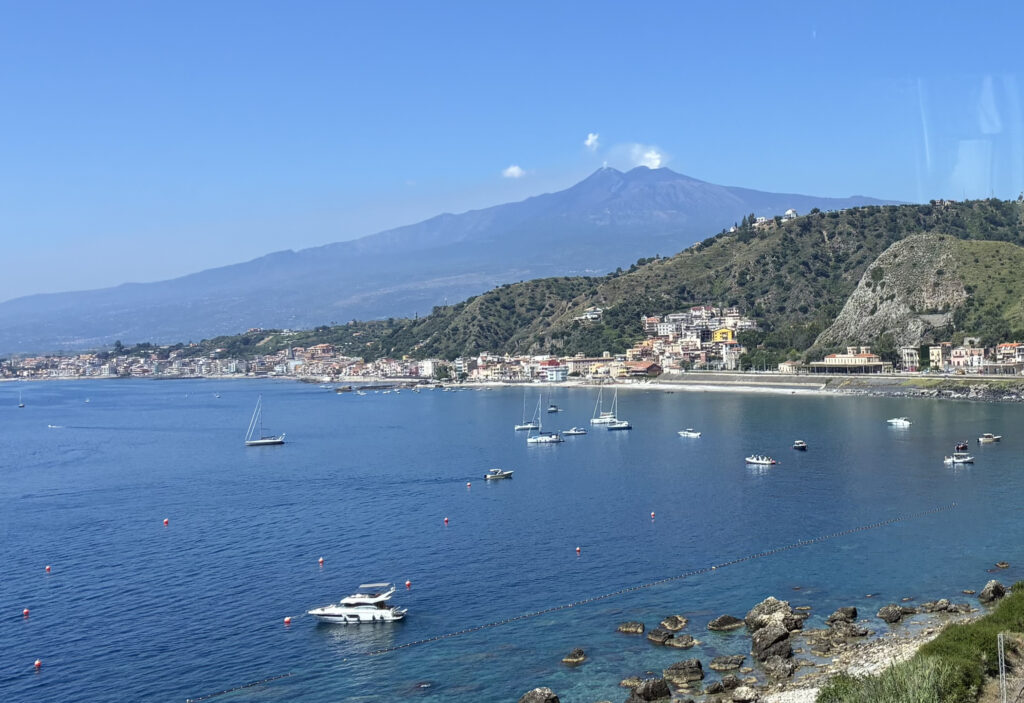
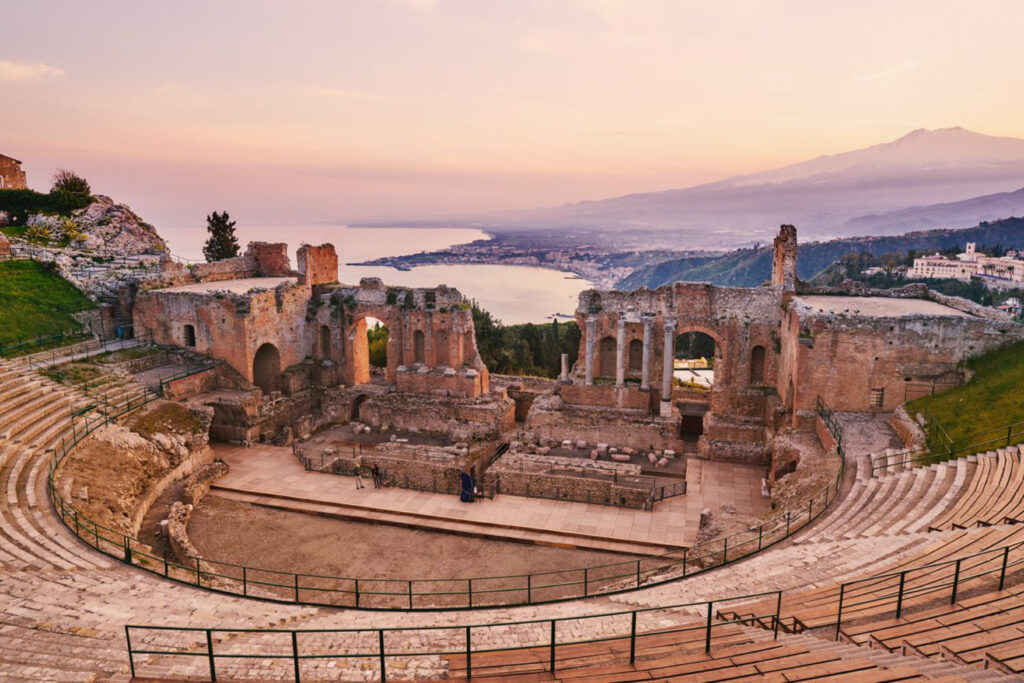
Just 45 minutes away lies Taormina, perched on jagged cliffs high above the Ionian Sea. Long celebrated by travel writers as one of the most beautiful towns in the world, Taormina offers charm at every turn. The Funivia Mazzarò (cable car) connects the lively town center to the beaches below and the picturesque Isola Bella. Within walking distance is the magnificent ancient Greek theater with a spectacular backdrop of Mount Etna and the Ionian Sea. Perched above Taormina sits Castelmola, a charming medieval village where visitors can wander castle ruins, take in sweeping views, and sample Vino de Mandorla, the town’s famous almond wine.
The train ride from Taormina to Palermo takes less than four hours and offers spectacular coastal scenery as the rail line hugs the coastline. Along the way, consider stopping in Cefalù, a delightful seaside town known for its imposing Norman cathedral with intricate Byzantine mosaics. Here you can relax on pristine beaches, stroll along quaint streets, and savor classic Sicilian dishes such as arancini (fried rice balls), cioppino (seafood stew), pasta alla Norma, and, for dessert, a heavenly cream-filled cannoli or a refreshing glass of chilled limoncello.
Palermo, Sicily’s vibrant capital, is a captivating blend of history and modern energy. Its Arab-Norman cathedrals, grand Baroque palaces, lush gardens, and bustling markets reflect centuries of cultural influence. The most scenic urban corner of Palermo is undoubtedly the Quattro Canti, the point where Via Maqueda and Via Vittorio Emanuele intersect, dividing the city into four historic districts.
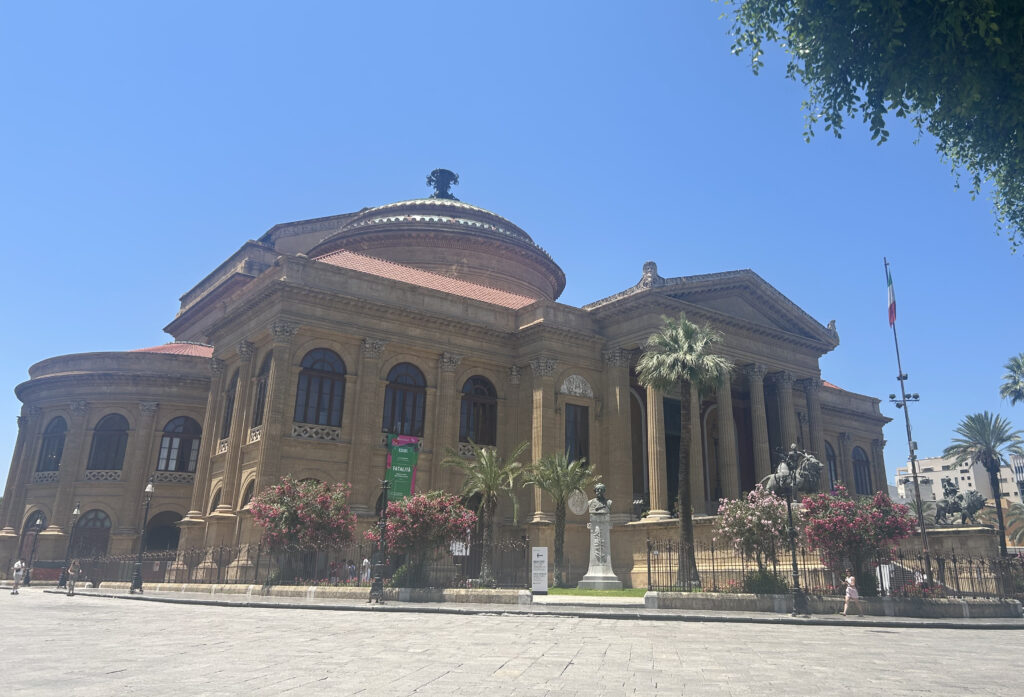
Along the winding streets of the old city, you will find stalls full of colorful merchandise and savory street food, which Palermo has become famous for. Visitors should also tour Teatro Massimo, Italy’s largest opera house, famously featured in The Godfather. At night, Palermo comes alive as its illuminated architecture, lively piazzas, and street musicians create an unforgettable atmosphere.
Beyond Palermo lie the rolling hills of the Alcamo wine region, increasingly recognized for its exceptional organic wines. Nearby is the historic city of Marsala, world-famous for its sweet, fortified wine. Visitors can sample local vintages and learn to prepare classic dishes like veal Marsala.
In western Sicily, the coastal city of Trapani enchants visitors with its beautifully restored old town, pedestrian streets, and waterfront promenades. From Trapani, take the cable car up to Erice, a remarkably preserved medieval village and Norman castle settled high above the sea. One of the most magnificent spots in all of Sicily, you can enjoy breathtaking views of the coastline on one side and panoramas of the surrounding countryside on the other. According to Greek mythology, the god Hercules once fought an important battle for the freedom of this mountaintop village. With its ancient ruins, quaint shops, and outdoor cafes, Erice promises a travel experience filled with enchantment and discovery.
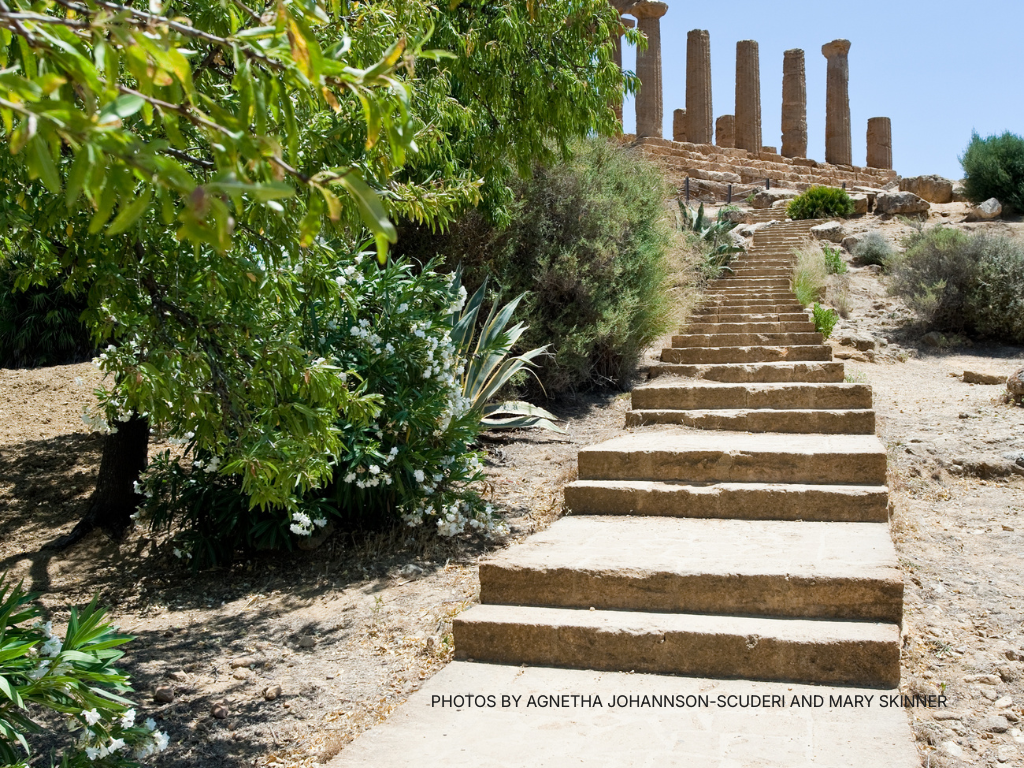
On Sicily’s southern shore lies the Valley of the Temples in Agrigento, one of the world’s most significant archaeological treasures. It is comprised of seven Greek temples to the gods, as well as the Tomb of Theron and several ancient sanctuaries. The Pietro Griffo Regional Archaeological Museum, located nearby, is an indispensable stop for those who want to learn about the area’s history. Strolling amidst the ruins of the Valley of the Temples, one can almost hear the whispers of gods and heroes echoing through the centuries.
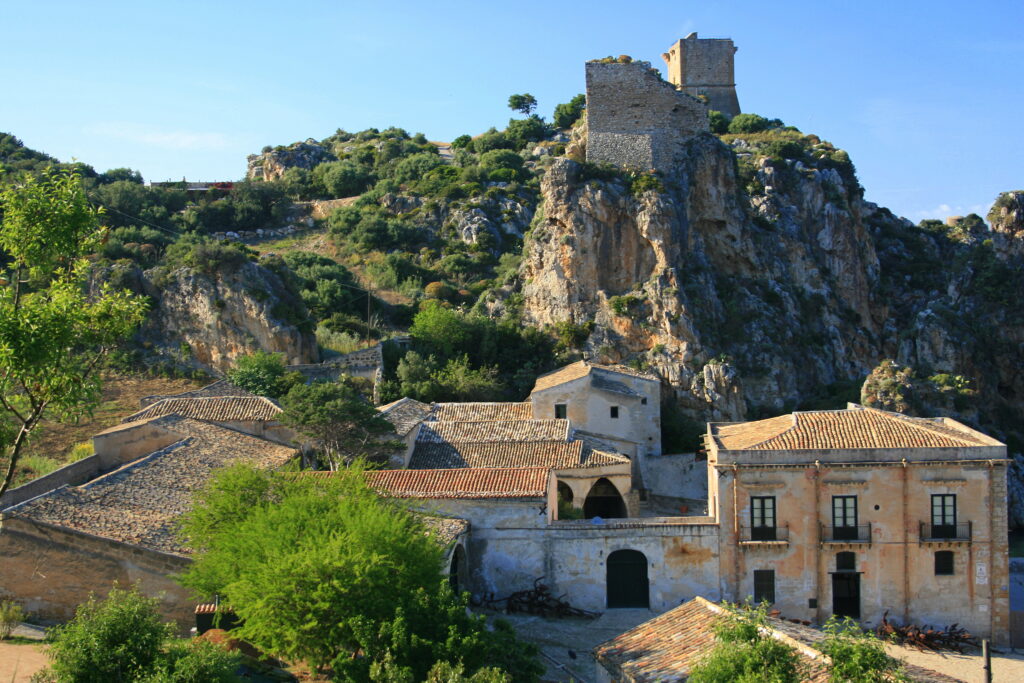
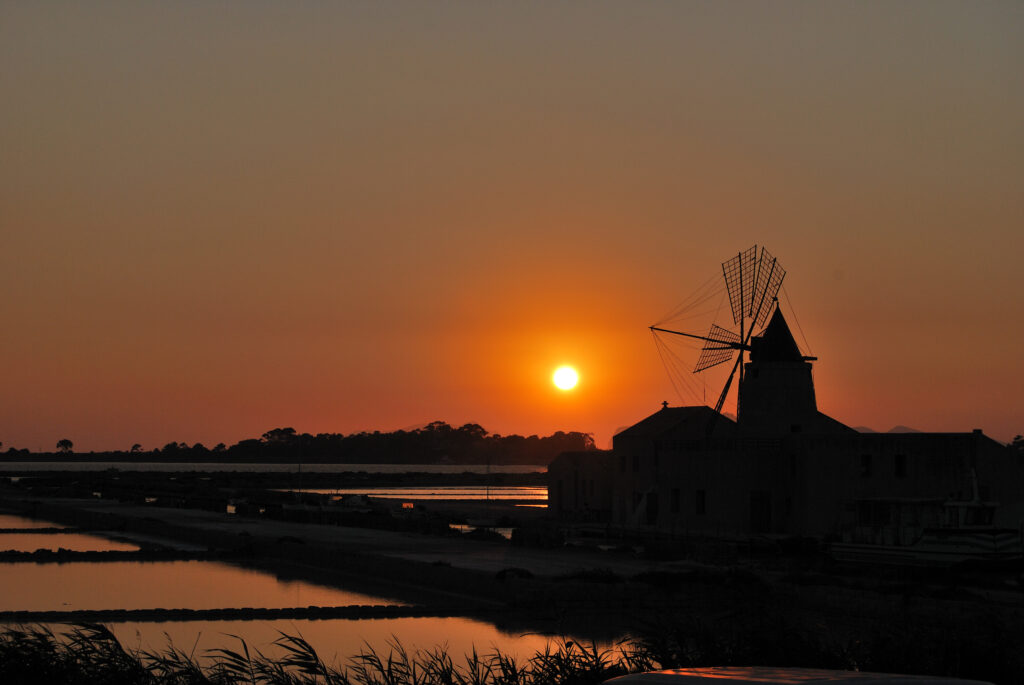
Travel further inland to Ragusa, a mountain town shaped by tragedy and renewal. After a devastating earthquake in 1693, the city was rebuilt into two distinct sections: Ragusa Superiore, the newer hilltop town, and Ragusa Ibla, where many historic buildings were carefully restored. Today, Ragusa’s stunning architecture stands as a testament to its resilience and enduring beauty.
As the journey comes full circle back toward Catania, travelers pass through the scenic Hyblaean Highlands, where olive groves, almond orchards, and citrus trees flourish beneath endless blue skies. The island’s crystalline waters, timeless landscapes, and rich cultural heritage leave a lasting impression. And now you know why Sicily deserves its title as the Land of the Gods!
A longtime resident of Middle Tennessee, MARY SKINNER balances her life as a professional writer with a passion for global exploration. Her travels frequently draw her back to Sicily; after three visits, she remains captivated by its unique charm and considers it one of the most enchanting places on Earth.
Share this story
To share this on your Instagram Story: Tap “Share” to copy the link. Open Instagram, go to “Your Story,” add a background photo/video, tap the 🔗 icon, paste the link, and hit Done. Add stickers or text like “Check this out!” then tap “Your Story” to post. Quick and easy—thanks for sharing!
Related Articles
-
 A Storied Home on School Street, Ready for Its Next Chapter
 -
 The Story Behind the Story Making Maury
 -
 A Taste of Italy at Home: Limoncello
 -
 Opening the Doors for a Cause
 -
 A Father’s Day Surprise — Dad Will Actually Use
 -
 The Food Pyramid Gets a Makeover
 -
 Make a Toast to Mom and Dad this Mother’s & Father’s Day
 -
 Home Additions — Creating Spaces You Love!
 -
 The Architecture of a Home Build
 -
 STRONG FATHERS, STRONG FAMILIES: Why Dad’s Health Matters More Than You Think
 -
 Taliaferro — Estate Living in the Heart of Williamson County
 -
 Taylor Hughes — Something in That Saddle
 -
 Leslie Curtis Jewelry Designs